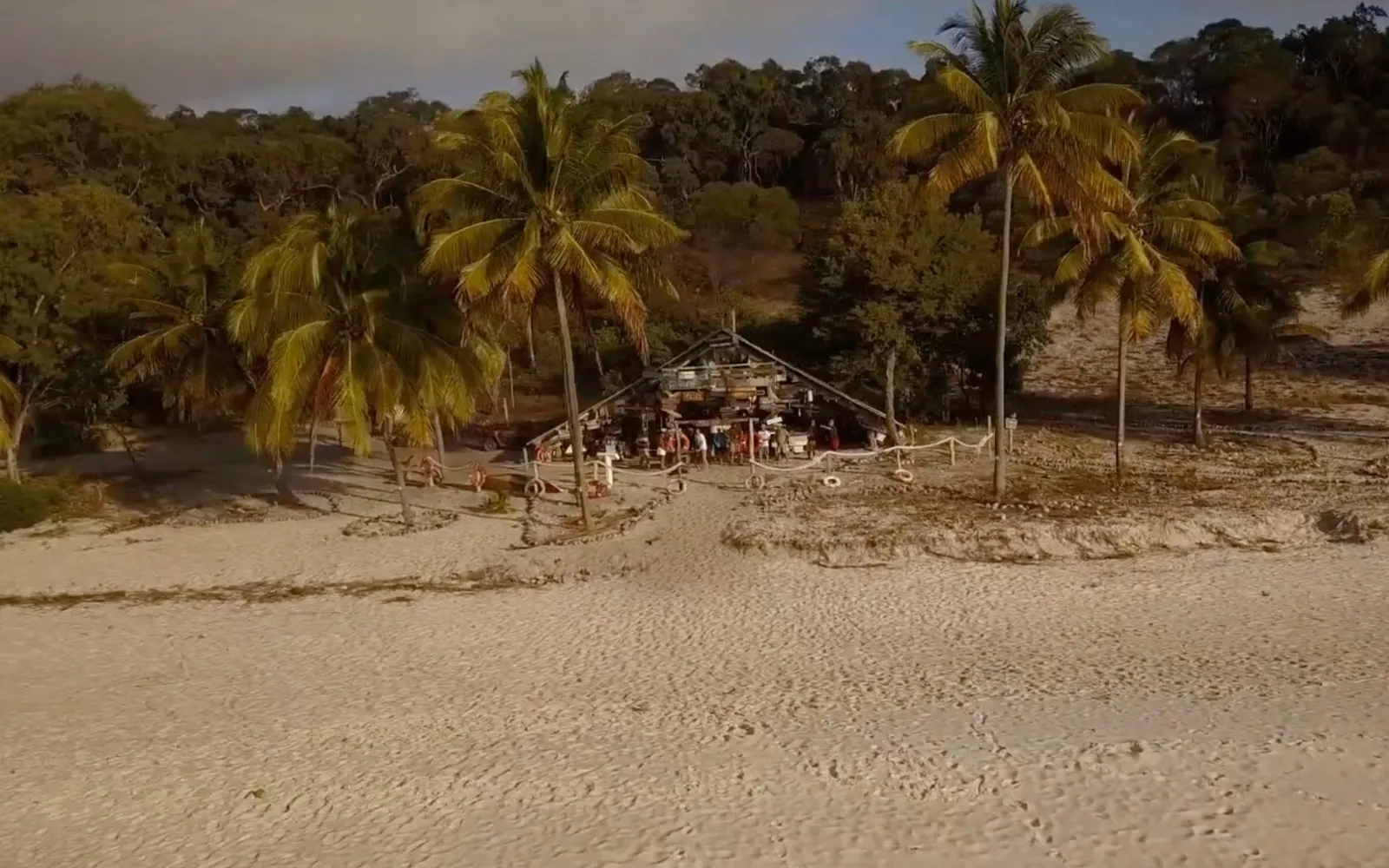
The Percy Isles, Past and Present tells the story of Australian European pioneering history on the island, up to the present day. It also includes what little is recorded of the Darumbal people, who regularly visited the island and used its resources until 1854, when they encountered European explorers.
Early visitors and settlers
Captain Matthew Flinders named the island in 1802. In the 1850s the Whites Beach area was reputedly settled by the Kanaka trader Captain Cook Till, who had a settlement of Pacific Islanders and Torres Strait Islanders. Many of these people were forcibly removed from their homes and taken to Mackay and Townsville to work in the cane fields.
In 1874 the Royal Navy left goats on the island to provide food for passing ships (read their story on the Colonial Percy Island goats page). Soon after, Jimmy Joss, Mason and Smith, rumoured to have been searching for gold, built a home, gardens and animal paddocks behind the tidal lagoon at West Bay. They bartered and sold produce to passing vessels, and applied for the island’s first government lease in 1875: just the lifestyle Flinders had envisaged.
The families who followed
In 1887 the Armitage family, coffee growers, took over the lease and built the Homestead near the top of the island, close to the water source.
In 1921 the White family, from Canada via New Zealand, made a living from sheep farming. They cleared the land by ring-barking trees to make paddocks for 2,000 sheep, a few cattle and horses.
The next permanent resident, Andrew (Andy) Martin, arrived in 1964 and bought the remainder of the pastoral lease under the Lands Act. With the sheep market in decline, he managed the rangeland goats to provide food and skins for a new breed of mariner, cruising yachties and fishermen, and began the tradition of island hospitality that continues today.
The land today
In 2011, for political reasons, the Middle Percy Island leasehold was moved from the Lands Act to Section 34 of the Nature Conservation Act. As part of the change, 83% of the former landholding became national park. The remaining 316 ha became the Percy Island Conservation Park, which the residents manage to protect the island’s infrastructure from vandals and to maintain its unique cultural heritage and nature conservation values.
Since 2024 the conservation park has been managed by the Percy Island Conservation Group Inc., a not-for-profit run by volunteers.
Introduced animals
The island’s introduced animals are goats, eastern grey kangaroos, red-necked wallabies, wallaroos and a few rusa deer.
Cane toads were introduced by the Whites, apparently on advice from the DPI, to control pests in the vegetable garden. The Whites built a fence around the garden, but the toads escaped and now breed all over the island in the seasonal creeks. Green tree frogs were also introduced to control mosquito larvae in the rainwater tanks, and have become established.
Further reading
- The Percy Isles, Past and Present by former residents Jon and Liz Hickling, available through state libraries.
- The article about Captain Cook Till by his family in The Coastal Passage (thecoastalpassage.com).